
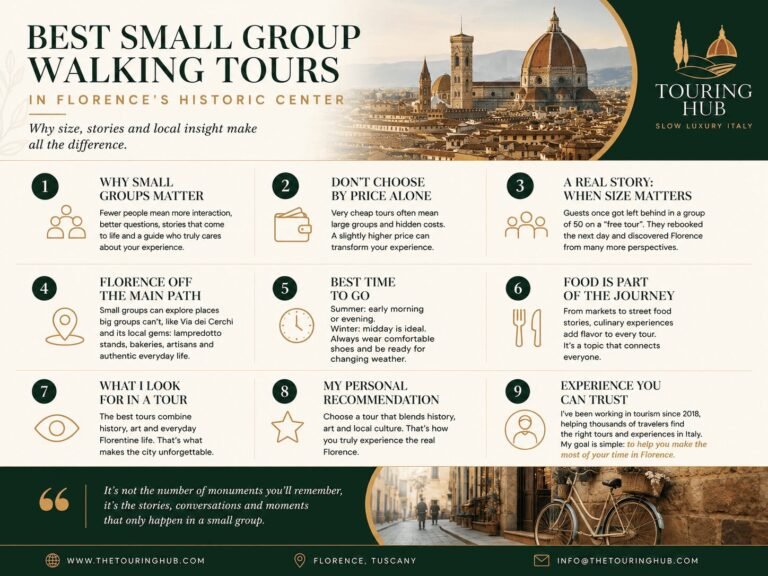
When travelers search for the best walking tours in Florence, they usually compare prices, ratings, and itineraries. While those factors matter, they’re not what determines whether you’ll leave with unforgettable memories or simply a collection of photos.
After working in Tuscany’s tourism industry since 2018, both behind the scenes and directly with travelers from around the world, I’ve helped countless visitors choose the right experiences for their trip. I’ve sold, organized, and personally experienced many walking tours throughout Florence, and over the years I’ve reached one clear conclusion:
The quality of a walking tour depends far more on the guide and the group size than on the list of landmarks included.
Almost every tour visits Florence Cathedral, Piazza della Signoria, and Ponte Vecchio. What makes the experience memorable is how those places are brought to life.
Why Small Group Walking Tours Offer a Better Experience
The greatest advantage of a small group isn’t simply having more space to walk. It’s the level of interaction between the guide and the guests.
An outstanding guide is enthusiastic, approachable, and genuinely passionate about Florence. They don’t just recite historical facts. They tell stories, answer questions, adapt to the group’s interests, and create an engaging experience that feels personal rather than scripted.
With a smaller group, the guide can:
- Learn what participants are most interested in.
- Answer questions without rushing.
- Adjust the pace naturally.
- Share stories that don’t fit into a rigid schedule.
- Make every guest feel involved instead of just following a flag through the streets.
In my experience, this personal connection is what transforms a good walking tour into one you’ll remember long after your vacation ends.
My Experience Working With Walking Tours
During my years in tourism, I’ve worked with travelers of every age, budget, and travel style. Some wanted to explore Florence’s masterpieces, while others were more interested in local traditions, hidden streets, or authentic food.
One thing became clear very quickly.
Most travelers aren’t looking for the most specialized experience possible. They want a tour that combines history, art, local culture, and practical insights into everyday Florentine life.
Highly niche experiences certainly have their audience, especially among frequent travelers returning to Florence for a second or third visit. But for most visitors, the ideal walking tour is one that offers a balanced introduction to the city while still feeling authentic and personal.
That’s exactly where small group tours excel.
A Real Story That Changed My Perspective
One experience shared by some clients perfectly illustrates why group size matters.
They had booked an extremely inexpensive walking tour that attracted nearly fifty participants. During the tour, they stopped to take a few photos and quickly found themselves separated from the group.
Nobody noticed.
Not the guide. Not the staff. Not the other participants.
They eventually decided to book another walking tour the following day because they had missed much of the first experience.
Interestingly, they later told me they enjoyed the second tour much more. The route wasn’t dramatically different, but the smaller group allowed the guide to engage with everyone, answer questions, and explore Florence from different perspectives instead of simply moving a crowd from one monument to another.
That experience reinforced something I’ve observed many times throughout my career: logistics alone can completely change the quality of a tour.
Don’t Make the Mistake of Choosing Only by Price
One of the biggest mistakes travelers make is selecting a walking tour based solely on price.
Large booking platforms often advertise tours for just a few dollars, making them appear to be incredible deals. But it’s worth asking yourself how a professional guide could realistically provide a high-quality experience at that price.
The answer is usually volume.
Very large groups make those prices possible, but they also reduce the personal attention each participant receives.
For only a modest increase in price, you can often enjoy:
- Smaller groups.
- Better communication with the guide.
- More opportunities to ask questions.
- A relaxed pace.
- A much more authentic experience.
Rather than thinking about the lowest possible cost, think about the value you’ll receive during the few hours you have to discover one of the world’s most beautiful cities.
The Hidden Side of Florence That Large Groups Often Miss
One of the greatest benefits of a small group is flexibility.
Large tour groups naturally stay within Florence’s biggest piazzas because navigating narrow medieval streets with dozens of people is difficult.
Some of the city’s most authentic places are found just a few steps away from the famous landmarks.
One area I particularly recommend is Via dei Cerchi.
Here you’ll discover a different side of Florence:
- Traditional lampredotto stands where local office workers stop for lunch.
- Family-run bakeries.
- Small fruit and vegetable shops.
- Artisan workshops still practicing traditional crafts.
- Quiet streets where daily Florentine life continues away from the busiest tourist routes.
These places may never appear on postcards, but they’re often where visitors experience the city’s true character.
When Is the Best Time to Take a Walking Tour?
Summer Walking Tours
During the warmer months, I always recommend booking either an early morning or evening tour.
You’ll avoid the hottest temperatures, enjoy softer lighting for photography, and experience a more comfortable pace.
Winter Walking Tours
In winter, midday is often the ideal time to explore.
The warmer temperatures make walking more enjoyable, and the city tends to feel quieter than during the peak summer season.
Regardless of when you visit, comfortable walking shoes are essential, and it’s always wise to be prepared for changing weather conditions.
Food Is Becoming an Essential Part of Walking Tours
One trend I’ve noticed over the past several years is the growing interest in food as part of every travel experience.
Whether visitors are passionate food lovers or simply curious about local culture, culinary traditions create an immediate connection with a destination.
Many of the best walking tours now naturally include stories about Florentine cuisine, local markets, historic cafés, or traditional street food like lampredotto.
Food is something everyone relates to, making it one of the most effective ways to understand a city’s history and everyday life.
What I Personally Look for in a Walking Tour
Whenever friends ask me to recommend a walking tour in Florence, I don’t focus on the number of attractions included.
Instead, I look for a tour description that combines three essential ingredients:
- History.
- Art.
- Everyday Florentine culture.
Florence isn’t only about Renaissance masterpieces.
It’s also about the traditions, neighborhoods, local businesses, and daily routines that continue to shape the city today.
The best guides know how to connect the city’s extraordinary past with the lives of the people who still call Florence home.
That’s the kind of experience visitors remember long after they’ve returned home.
Final Thoughts
After seven years working in tourism, helping thousands of travelers plan their time in Tuscany, I’ve learned that unforgettable experiences rarely come from trying to see the most attractions in the shortest amount of time.
Instead, they come from slowing down, asking questions, listening to passionate local guides, and exploring Florence with enough space to appreciate both its famous monuments and its hidden corners.
If you’re choosing between a crowded budget tour and a well-organized small group experience, my advice is simple: invest in the experience, not just the itinerary.
The difference isn’t measured by how many landmarks you visit.
It’s measured by how connected you’ll feel to Florence when the tour is over, and those are the memories that last a lifetime.